

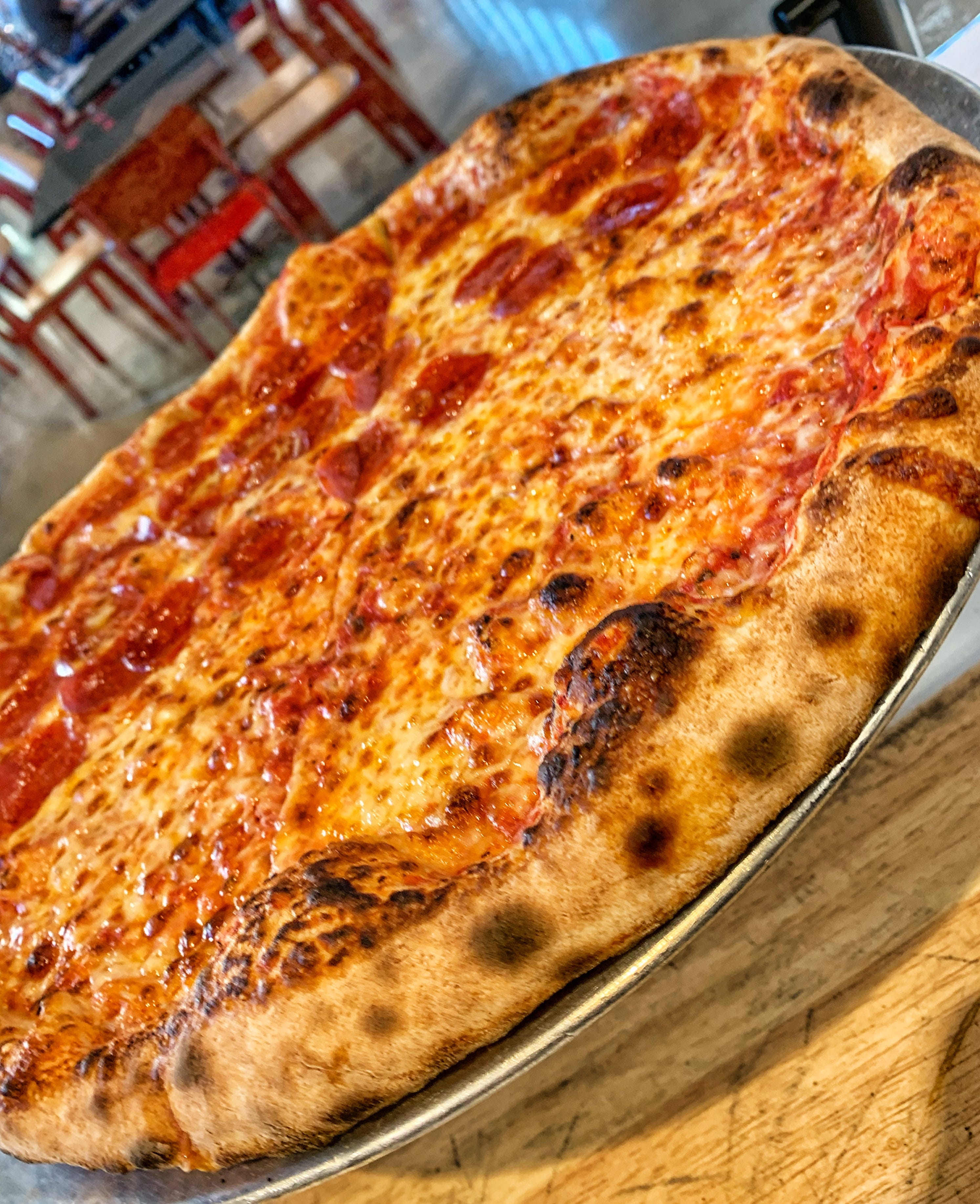
Back in 2019, I opened a pizza joint in Southern California with one goal in mind: bring New Jersey style pizza to the masses. The truth is, what most people think of as New York-style pizza did not start in New York at all. It came out of Trenton, New Jersey, where coal ovens and no nonsense dough set the template long before the hype caught up. We served dollar slices and classic pies with a few spins of our own. The idea was simple - make a great, affordable slice at a time when Chipotle-style pizza concepts were taking over strip malls and charging premium prices for something that felt disposable.
Then the pandemic hit.
During COVID, we stayed open and started giving pizza away. Veterans ate for free. People struggling to afford meals ate for free. We fed every worker in the food hall for free and, without really planning to, turned the place into a charity pizza joint. As inflation surged and service workers lost jobs, we kept giving pizza away. We even catered kids’ birthday parties at no cost for families who were having a hard time.
It was not a profitable enterprise. But because Lauren and I were the only ones working, we did not have the overhead of additional labor. We absorbed the cost ourselves and accepted that we would lose money for the greater good. We always fed veterans for free, and we stood by the fact that we were making some of the best pizza in Southern California.
When our lease expired in 2024, we moved on and closed Big Parm.


Since then, I have received hundreds of emails asking if we are going to open again, mostly asking about the buttered lobster pizza. One day, maybe. But for now, it felt right to give something back.
So here it is. The pizza dough recipe.
The key is a long, overnight ferment. You can absolutely follow this recipe and do a quicker four to six-hour ferment, but if you want deeper flavor and better texture, let the dough rest in the fridge overnight. I included both weight and volume measurements to make it as accessible as possible.
Please enjoy.


Pizza Dough for 2 Large Pizzas
About 1,000 grams of total dough
Ingredients (Weight and Volume)
High gluten flour
22.1 ounces
About 4½ cups, spooned and leveled
Warm water
12.6 ounces
About 1½ cups plus 1 tablespoon
Kosher salt
0.6 ounces
About 1 tablespoon Diamond Crystal
or 2 teaspoons Morton
Fresh yeast
0.04 ounces
About a pea sized piece
If using instant dry yeast
0.012 ounces
About ⅛ teaspoon, scant
Directions
Add the water and yeast to the mixer. Mix on speed 1 for 1 to 2 minutes until the water turns cloudy and the yeast dissolves.
Add the flour, then the salt.
Mix on speed 1 until the dough forms a smooth ball and pulls cleanly from the bowl.
Lightly oil a container, add the dough, and cover tightly.
Rest at room temperature for 2 to 4 hours until nearly doubled.
Divide into 2 dough balls, about 17.6 ounces each.
Rest 4 to 6 hours at room temperature or refrigerate overnight before baking.
Making the Dough by Hand (No Mixer)
In a large bowl, add the warm water and yeast. Stir until the yeast dissolves and the water looks slightly cloudy.
Add about three-quarters of the flour and mix with your hand until a thick batter forms.
Sprinkle in the salt, then add the remaining flour.
Mix until a shaggy dough comes together, then turn it out onto a clean work surface.
Knead by hand for 8 to 10 minutes until the dough becomes smooth, elastic, and no longer sticky. Use only a light dusting of flour if needed.
Form the dough into a tight ball, lightly oil a container, place the dough inside, and cover tightly.
Rest at room temperature for 2 to 4 hours until nearly doubled.
Divide into 2 dough balls and rest 4 to 6 hours at room temperature or refrigerate overnight before baking.
Troubleshooting
Dough feels too sticky
This dough is around 57 percent hydration, so it should feel slightly tacky. If it is hard to handle, lightly dust your hands and work surface with flour. Do not add excess flour directly to the dough.
Dough is tight and hard to stretch
The dough needs more rest. Let it sit at room temperature for 20 to 30 minutes before stretching. Cold dough will always fight you.
Dough tears when stretching
This usually means it is under fermented or under mixed. Make sure the dough has rested long enough and feels smooth. An overnight ferment helps.
Dough spreads too much
This can happen if the dough is over proofed or too warm. Re ball lightly and let it rest for 15 to 20 minutes before stretching again.
Crust lacks flavor
Increase fermentation time. An overnight cold ferment will always improve flavor.
Bottom burns before the top cooks
Move the pizza higher in the oven or lower the temperature slightly. Stones and steels placed too low can scorch the crust.
Pizza is pale
Make sure your oven and baking surface are fully preheated. Longer preheat equals better color.
Home Oven Baking Guide
Preheat your oven to its highest setting, usually 500 to 550 degrees. Place your baking steel or stone in the oven before turning it on. Let it preheat for at least 45 minutes.
Position the steel or stone on the lower third of the oven for strong bottom heat.
Stretch the dough gently and build the pizza quickly.
Launch the pizza directly onto the hot surface.
Bake for 5 to 8 minutes depending on your oven. Rotate once if needed.
If the bottom cooks faster than the top, move the pizza to a higher rack for the final minute. If the top cooks faster than the bottom, lower the rack or extend the preheat.
Let the pizza rest for one minute before slicing.
Baking Steel vs Baking Stone
A baking steel transfers heat faster and more aggressively. It produces better oven spring and darker bottoms. If your oven reaches 525 degrees or higher, steel will give you the closest result to a deck oven.
A baking stone heats more slowly and releases heat more gently. It is more forgiving and works well in ovens that struggle to hold high temperatures. Stones are less likely to burn the bottom but may produce a lighter crust.
If you want maximum performance and strong New Jersey style results, use a steel. If you want an easier learning curve, use a stone.
Thanks for sharing this. Might give it a go and see if I can cook a better pie than locals out in the sticks of Pa. Also an NJ expat
Dammit, Andrew. I didn’t know your backstory. Good man…